
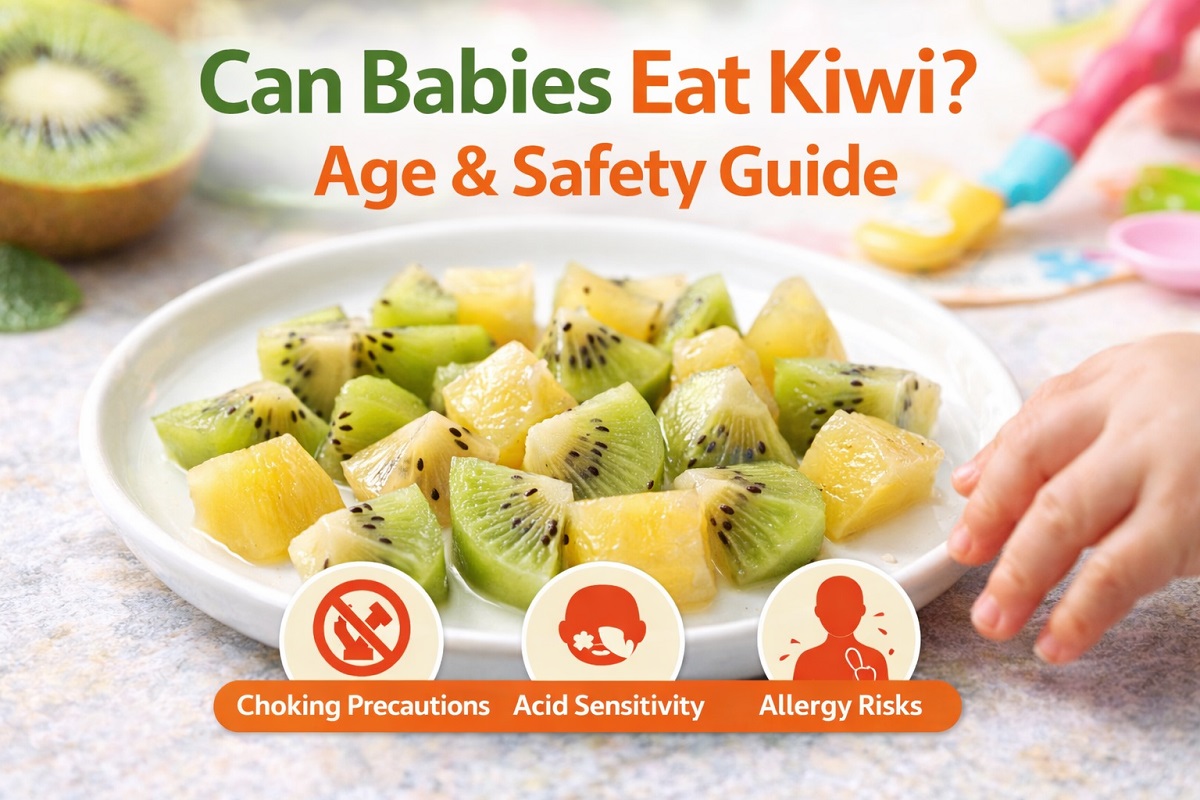
Can Babies Eat Kiwi? Age & Safety Guide for Parents
Kiwi is a nutrient-rich fruit loved worldwide for its bright flavor and impressive vitamin C content. But many parents wonder: Can babies eat kiwi safely? If so, at what age? And how should it be prepared?
This evidence-informed guide explains when and how to introduce kiwi to babies, choking precautions, acid sensitivity considerations, allergy awareness, and safe serving methods – designed for a global parenting audience.
At What Age Can Babies Eat Kiwi?
Most pediatric nutrition guidelines worldwide suggest that babies can begin eating kiwi around 6 months of age, when they start solid foods.
However, readiness signs are more important than age alone. Your baby should:
- Sit upright with minimal support
- Have good head and neck control
- Show interest in food
- Be able to swallow pureed textures
If your baby was born prematurely or has digestive sensitivities, consult a pediatric healthcare professional before introducing acidic fruits like kiwi.
Is Kiwi Safe for Babies?
Yes – when prepared properly, kiwi can be safe and nutritious for babies.
Kiwi provides:
- High levels of vitamin C
- Dietary fiber
- Antioxidants
- Potassium
- Natural digestive enzymes (actinidin)
However, there are three important safety considerations parents must keep in mind:
- Choking risk
- Acid sensitivity
- Allergy potential
Choking Precautions: How to Serve Kiwi Safely
Whole kiwi or large chunks can be a choking hazard for babies and young toddlers.
Safe Preparation by Age
6–8 Months
- Serve mashed or pureed kiwi
- Remove skin completely
- Mix with yogurt, oatmeal, or banana to reduce acidity
9–12 Months
- Offer very small, soft pieces
- Ensure fruit is fully ripe (soft when pressed)
- Continue removing skin
12+ Months
- Small diced pieces are generally safe
- Supervise closely during eating
Important: Always seat babies upright during feeding and supervise them while eating.
Acid Sensitivity: Can Kiwi Cause Diaper Rash or Mouth Irritation?
Yes – kiwi is naturally acidic. Some babies may experience:
- Mild diaper rash
- Redness around the mouth
- Temporary lip irritation
This does not necessarily mean your baby is allergic. It may simply be acid sensitivity.
How to Reduce Acid Reaction
- Start with small amounts
- Serve alongside less acidic foods (banana, avocado, yogurt)
- Wipe baby’s mouth gently after feeding
- Apply protective barrier cream before feeding if prone to rash
If symptoms are severe or include swelling or hives, seek medical advice.
Kiwi Allergy: What Parents Should Know
Kiwi is considered a moderately allergenic fruit in some regions.
Possible allergy symptoms include:
- Hives
- Facial swelling
- Vomiting
- Wheezing
- Persistent rash
Introduce kiwi during daytime hours so you can monitor for reactions. If your child has known food allergies or eczema, consult a pediatrician before introduction.
Benefits of Kiwi for Babies
1. Supports Immune Health
Kiwi is extremely rich in vitamin C, which supports immune function and iron absorption.
2. Helps Prevent Constipation
Kiwi contains fiber and natural enzymes that may support gentle digestion.
3. Encourages Flavor Diversity
Introducing a variety of fruits early may help expand taste preferences later in childhood.
How Much Kiwi Can Babies Eat?
Start with 1–2 teaspoons of mashed kiwi and observe tolerance.
If well tolerated, kiwi can be offered as part of a balanced fruit rotation. Avoid excessive portions, as too much fiber may cause loose stools.
When Should Parents Avoid Giving Kiwi?
Delay or seek medical advice if your baby:
- Has severe eczema
- Has known latex allergy (possible cross-reactivity)
- Has a history of food-induced anaphylaxis
- Shows signs of oral allergy syndrome
Frequently Asked Questions
Can babies eat kiwi skin?
No. Kiwi skin is rough and increases choking risk. Always remove it for babies and toddlers.
Is golden kiwi better for babies?
Golden kiwi is often slightly sweeter and less acidic than green kiwi, which may reduce irritation in sensitive babies.
Can kiwi help baby constipation?
Kiwi’s fiber and natural enzymes may support bowel movements, but introduce gradually.
What if my baby spits it out?
New flavors can take multiple exposures. Try again later without forcing.
Final Thoughts: Is Kiwi Safe for Babies?
Yes – when introduced at the right age and prepared properly, kiwi can be a nutritious addition to your baby’s diet.
Key safety reminders:
- Introduce around 6 months when ready for solids
- Always remove skin
- Serve mashed or finely chopped
- Monitor for acid irritation or allergic reactions
- Supervise feeding at all times
With proper preparation and observation, kiwi can be a healthy and enjoyable fruit for babies worldwide.