
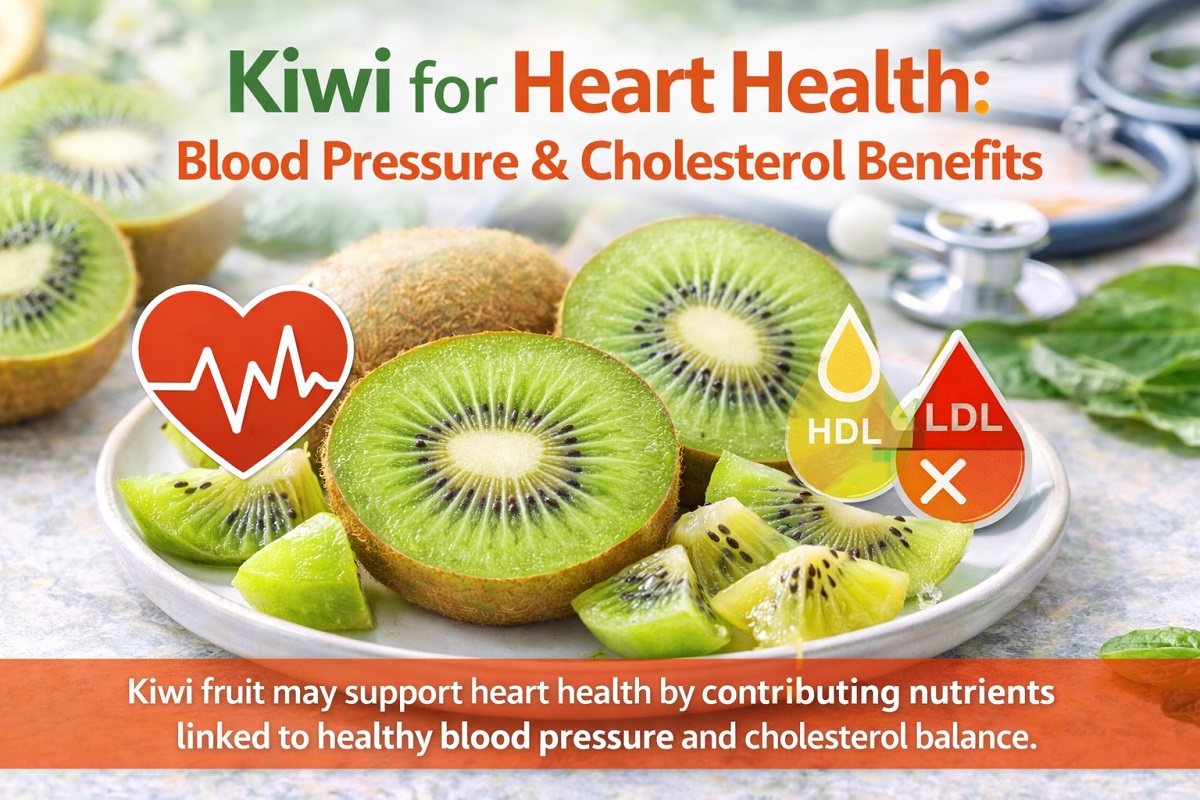
Kiwi for Heart Health: Blood Pressure & Cholesterol Benefits
Heart disease remains one of the leading health concerns worldwide. Because of this, many people look for natural foods that may support cardiovascular health.
Kiwi fruit has gained attention in nutritional research due to its rich combination of vitamin C, potassium, fiber, and antioxidants. Some studies suggest that regular kiwi consumption may support healthy blood pressure levels and improve cholesterol markers.
This article explains how kiwi may benefit heart health, what scientific studies suggest, and how it can fit into a heart-friendly diet.
Why Kiwi Is Considered a Heart-Healthy Fruit
Kiwi contains several nutrients associated with cardiovascular health:
- Vitamin C – powerful antioxidant that helps reduce oxidative stress
- Potassium – supports healthy blood pressure regulation
- Dietary fiber – contributes to cholesterol management
- Polyphenols – plant compounds linked to heart protection
- Actinidin – enzyme that supports digestion and nutrient absorption
Together, these nutrients may contribute to improved vascular function and reduced cardiovascular risk.
Kiwi and Blood Pressure
Potassium-rich foods are widely recommended for maintaining healthy blood pressure. Kiwi naturally contains potassium and antioxidants that support blood vessel function.
Some nutritional studies have observed that individuals who consumed kiwi regularly experienced modest improvements in blood pressure levels.
The proposed mechanisms include:
- Improved nitric oxide availability
- Reduced oxidative stress
- Better blood vessel relaxation
While kiwi alone is not a treatment for hypertension, it may be a beneficial addition to a balanced diet designed to support cardiovascular health.
Kiwi and Cholesterol Levels
Cholesterol balance is another important factor in heart health. Research has explored whether kiwi consumption may help improve lipid profiles.
Some findings suggest that eating kiwi regularly may:
- Support healthy HDL (“good”) cholesterol levels
- Help reduce LDL (“bad”) cholesterol oxidation
- Improve overall cholesterol balance
The fiber and antioxidants in kiwi are thought to play a role in these potential effects.
Antioxidants and Cardiovascular Protection
Oxidative stress contributes to inflammation and damage in blood vessels. Kiwi is rich in antioxidants, including:
- Vitamin C
- Vitamin E
- Polyphenols
- Carotenoids
These compounds may help protect blood vessels from oxidative damage and support overall heart health.
Scientific Research on Kiwi and Heart Health
Several clinical and observational studies have explored kiwi’s cardiovascular effects.
Some studies have reported that participants consuming two to three kiwis daily for several weeks showed improvements in markers such as blood pressure, platelet aggregation, and antioxidant status.
However, researchers emphasize that kiwi should be viewed as part of an overall healthy lifestyle rather than a standalone treatment.
How Much Kiwi Should You Eat for Heart Health?
Nutrition research often evaluates consumption of around 2–3 kiwis per day.
This amount provides substantial vitamin C, fiber, and potassium while remaining within a healthy fruit intake range.
As with all dietary habits, individual needs vary depending on overall health, medications, and dietary patterns.
Green vs Golden Kiwi for Heart Health
Both common kiwi varieties provide heart-supportive nutrients.
- Green kiwi – slightly higher fiber content
- Golden kiwi – typically higher in vitamin C
- Red kiwi – contains additional antioxidants
All varieties can be part of a heart-conscious diet.
Other Heart-Healthy Lifestyle Habits
While kiwi may contribute beneficial nutrients, overall lifestyle choices remain essential for cardiovascular health.
Key habits include:
- Eating a balanced diet rich in fruits and vegetables
- Maintaining healthy body weight
- Regular physical activity
- Managing stress
- Following medical guidance for blood pressure and cholesterol
Frequently Asked Questions
Does kiwi lower blood pressure?
Kiwi contains potassium and antioxidants that may help support healthy blood pressure levels when consumed as part of a balanced diet.
Can kiwi reduce cholesterol?
Some research suggests kiwi may support healthy cholesterol balance by helping improve HDL levels and reducing LDL oxidation.
How many kiwis should you eat daily for heart health?
Many studies evaluate the effects of consuming two to three kiwis per day, though individual dietary needs may vary.
Is kiwi better than other fruits for heart health?
Kiwi is highly nutrient-dense, but many fruits contribute to heart health. Variety in fruit consumption is generally recommended.
Is green or golden kiwi better for heart health?
Both green and golden kiwi provide beneficial nutrients. Green kiwi contains slightly more fiber, while golden kiwi typically has higher vitamin C levels. Both varieties can support heart-healthy nutrition.
Can kiwi replace medication for high blood pressure or cholesterol?
No. Kiwi is a nutritious fruit that may support cardiovascular health, but it should not replace medical treatments prescribed by a healthcare professional.
Are there any risks of eating too much kiwi?
Eating excessive amounts of kiwi may cause digestive discomfort in some people due to its fiber and natural enzymes. Individuals with kiwi allergies or latex-fruit syndrome should avoid the fruit.
Conclusion
Kiwi fruit offers a powerful combination of vitamin C, potassium, fiber, and antioxidants that may support cardiovascular health.
Research suggests that regular kiwi consumption may help support healthy blood pressure levels, improve cholesterol balance, and protect blood vessels from oxidative stress.
While kiwi is not a medical treatment, it can be a nutritious addition to a heart-friendly diet and healthy lifestyle.