
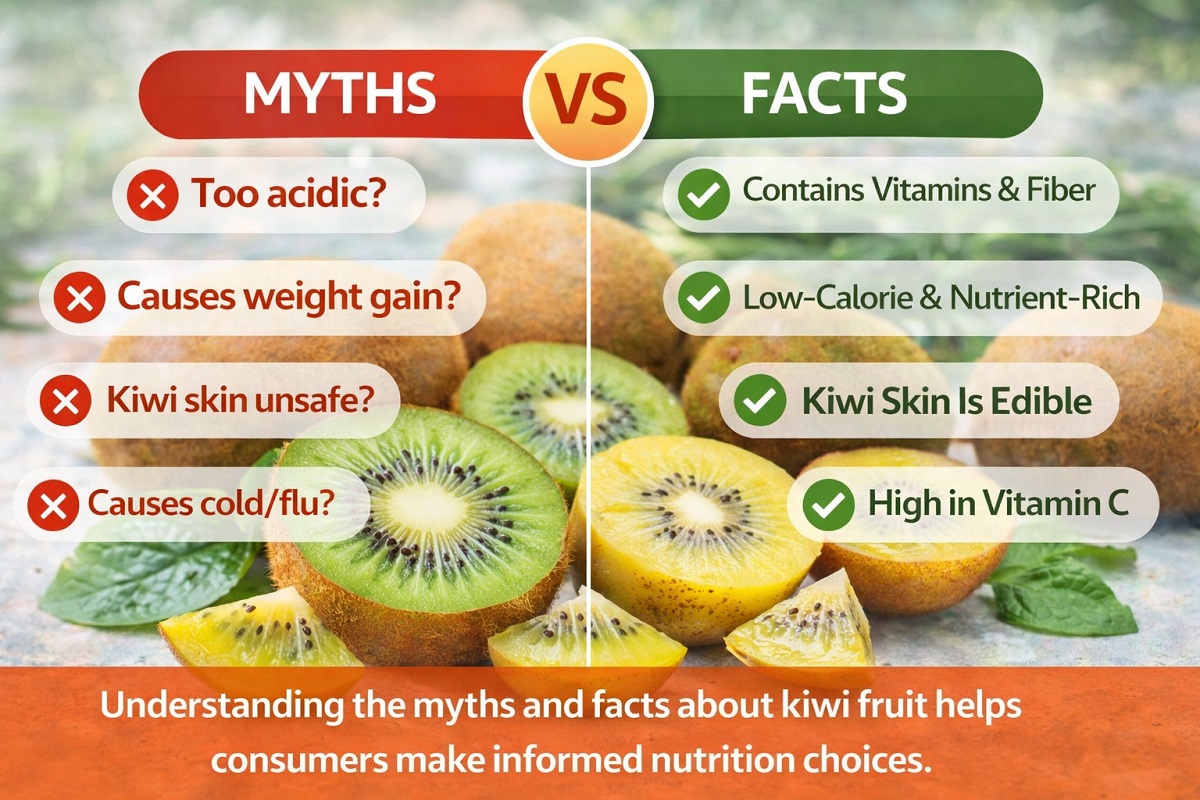
Kiwi Myths and Facts: Addressing the Top Misconceptions About Kiwi Fruit
Kiwi fruit is widely recognized for its bright green flesh, refreshing taste, and impressive nutrient content. Despite its popularity around the world, several misconceptions about kiwi still circulate online and in everyday conversations.
Some people believe kiwi is too acidic to eat regularly, while others think the fruit may cause weight gain or that its fuzzy skin is unsafe to consume. In reality, most of these claims are based on misunderstandings rather than scientific evidence.
This article separates common myths from facts to help readers better understand kiwi fruit and its role in a balanced diet.
Myth 1: Kiwi Is Too Acidic to Eat Regularly
One of the most common beliefs about kiwi fruit is that it is excessively acidic and may harm the stomach.
The Fact
Kiwi does contain natural organic acids such as citric acid, which contribute to its slightly tangy taste. However, kiwi is generally considered safe for most people to eat as part of a balanced diet.
In fact, many nutrition studies have examined kiwi for its potential digestive benefits due to its fiber content and natural enzyme called actinidin.
Some individuals with sensitive stomachs or acid reflux may prefer eating kiwi in moderation, but for most people, kiwi is not considered unusually acidic compared to other fruits.
Myth 2: Kiwi Causes Weight Gain
Another common misconception is that eating kiwi may lead to weight gain because it contains natural sugars.
The Fact
Kiwi is actually considered a relatively low-calorie fruit. A typical kiwi contains roughly 40–50 calories depending on its size.
Additionally, kiwi provides dietary fiber, which can help promote feelings of fullness. Many people include kiwi in weight-management diets because it offers sweetness and nutrients without excessive calories.
Like most fruits, kiwi can be part of a balanced diet when consumed in appropriate portions.
Myth 3: Kiwi Skin Is Unsafe to Eat
The fuzzy outer skin of green kiwi fruit often makes people assume that it must be removed before eating.
The Fact
Kiwi skin is technically edible and contains additional fiber and antioxidants. Some people choose to eat the fruit whole after washing it thoroughly.
However, eating the skin is entirely optional. Many people prefer to peel kiwi simply because of its texture.
Golden kiwi varieties usually have smoother skin, which some consumers find easier to eat.
Myth 4: Kiwi Causes Cold or Flu Symptoms
In some cultures, people believe that eating certain fruits during colder weather may cause or worsen cold and flu symptoms.
The Fact
There is no scientific evidence showing that kiwi fruit causes colds or flu. In fact, kiwi contains high levels of vitamin C, which plays an important role in supporting immune function.
Some research has explored whether vitamin C-rich fruits like kiwi may help support immune health, although they should not be considered a treatment for infections.
Myth 5: Golden Kiwi Is Less Nutritious Than Green Kiwi
Because green kiwi is more widely known, some people assume that golden kiwi is less nutritious.
The Fact
Both varieties provide valuable nutrients, although their profiles differ slightly.
| Kiwi Variety | Key Characteristics | Nutritional Notes |
|---|---|---|
| Green Kiwi | Tangy flavor with bright green flesh | Slightly higher fiber content |
| Golden Kiwi | Sweeter taste with yellow flesh | Often contains higher vitamin C levels |
| Red Kiwi | Sweeter flavor with red center | Rich in antioxidants and pigments |
Each variety offers its own nutritional advantages, so the best choice often depends on personal taste preferences.
Why Food Myths Spread Easily
Food myths often spread quickly because nutrition information is sometimes simplified or taken out of context. Social media, word-of-mouth advice, and cultural beliefs can also contribute to misunderstandings.
Reliable nutrition information typically comes from peer-reviewed research, registered dietitians, and health organizations rather than viral claims.
How to Evaluate Nutrition Claims Online
When reading about food and health online, it helps to consider a few key questions:
- Is the claim supported by scientific research?
- Does the information come from a credible source?
- Is the claim exaggerated or overly simplified?
- Does the article acknowledge limitations or uncertainty?
These questions can help readers identify trustworthy nutrition information.
Frequently Asked Questions
Is kiwi safe to eat every day?
For most people, eating kiwi regularly is safe and can contribute useful nutrients such as vitamin C, fiber, and potassium.
Do you need to peel kiwi before eating?
No. Kiwi skin is edible if the fruit is washed properly, although many people prefer peeling it due to its fuzzy texture.
Which kiwi variety is healthiest?
Green, golden, and red kiwi all provide beneficial nutrients. The healthiest choice often depends on dietary needs and personal preference.
Can kiwi help support the immune system?
Kiwi contains vitamin C and antioxidants that may help support normal immune function as part of a balanced diet.
Conclusion
Many myths about kiwi fruit arise from misunderstandings about nutrition, acidity, or natural sugars. Scientific research shows that kiwi is a nutrient-rich fruit that can be safely enjoyed by most people.
Whether eaten fresh, sliced into fruit salads, or blended into smoothies, kiwi offers vitamins, fiber, and antioxidants that contribute to a balanced diet.
Understanding the difference between myths and facts can help people make informed choices about the foods they eat.