
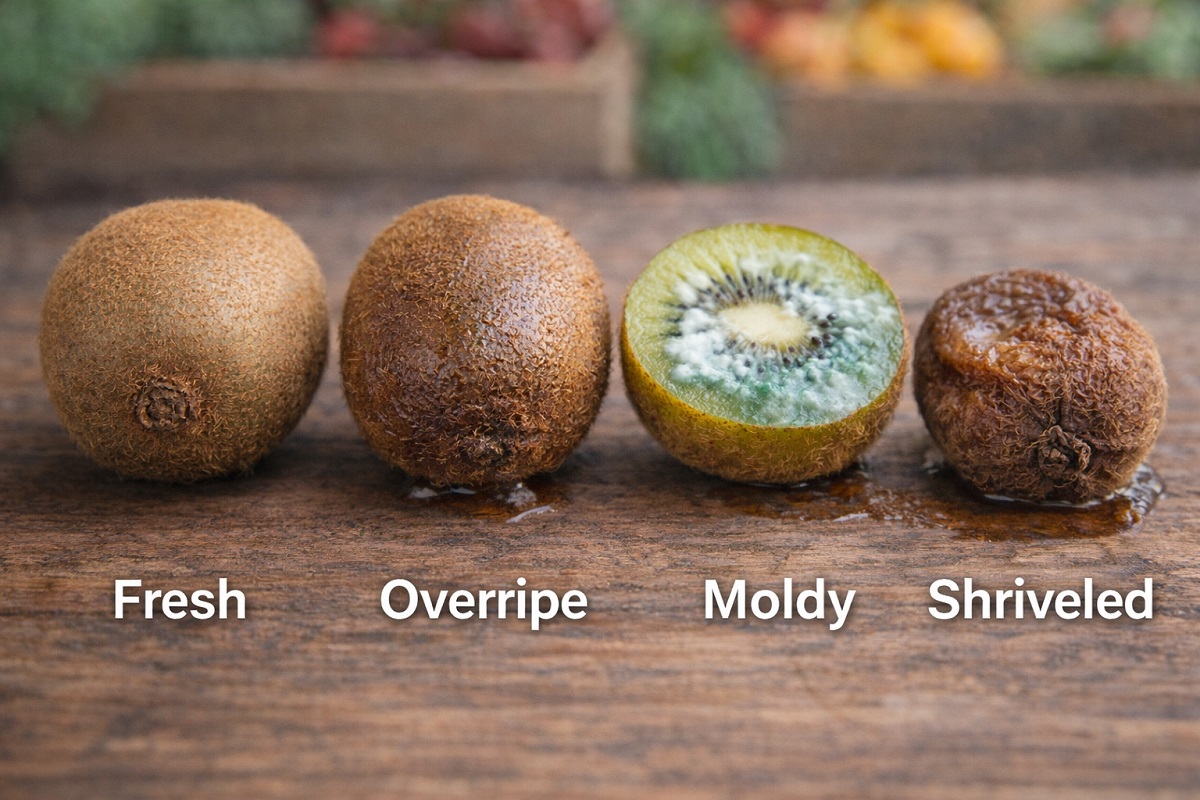
How to Spot Spoiled Kiwi: Signs of Bad or Rotten Kiwi Fruit
Kiwi is known for its bright green, golden, or red flesh and refreshing sweet-tart flavor. When fresh, it feels vibrant, juicy, and slightly fragrant. But like any fruit, kiwi does not stay fresh forever. Knowing how to spot spoiled kiwi can help you avoid unpleasant taste, food waste, and potential digestive discomfort.
Whether you buy kiwi from a supermarket, local market, or grow it at home, understanding the difference between ripe, overripe, and spoiled fruit is essential. As explained in our Kiwi Buying Guide, quality selection begins at the store, but proper evaluation continues at home.
This guide will help you recognize clear signs of bad kiwi using smell, texture, appearance, and taste indicators. You will also learn when slightly soft kiwi is still safe to eat and when it should be discarded.
Why It’s Important to Identify Spoiled Kiwi Early
Kiwi has high water content and natural sugars, which makes it highly nutritious, but also perishable. Once it starts breaking down, microorganisms grow quickly, especially if stored improperly.
Eating mildly overripe kiwi is usually harmless, but consuming rotten fruit with mold or fermentation can cause digestive upset. Early identification helps you:
- Avoid eating unsafe fruit
- Prevent cross-contamination in your fridge
- Reduce unnecessary food waste
- Use slightly soft fruit before it spoils completely
Visual Signs of Spoiled Kiwi
1. Mold on the Skin or Flesh
Mold is the clearest sign that kiwi should not be eaten. It may appear as white, green, or gray fuzzy patches on the skin. Sometimes mold is only visible after cutting the fruit.
If you see mold:
- Discard the entire fruit immediately
- Do not cut away moldy portions
- Check nearby fruits for contamination
Because kiwi has soft flesh, mold can spread internally even if it appears localized.
2. Dark Brown or Black Flesh
Fresh green kiwi should have vibrant emerald flesh with small black seeds. Golden kiwi should appear bright yellow, and red kiwi will have a reddish center.
If the inside looks:
- Very dark brown
- Blackened around the core
- Unevenly discolored
It likely indicates spoilage rather than normal ripening.
3. Leaking Juice or Sticky Surface
If the skin feels sticky, wet, or is leaking fluid, fermentation may have started. This is especially common if kiwi was stored in warm conditions.
Leaking fruit should not be consumed.
4. Severely Wrinkled or Shriveled Skin
Slight wrinkling means moisture loss and over-ripeness. However, deeply shriveled kiwi with collapsed sides usually indicates dehydration combined with internal breakdown.
At this stage, texture and taste are often compromised.
Texture Clues: What Touch Can Tell You
1. Too Soft and Mushy
A ripe kiwi should yield slightly when pressed gently, similar to a ripe peach or avocado.
If it feels:
- Extremely soft
- Watery inside
- Collapsing under light pressure
It is likely overripe or spoiled.
However, remember: soft does not always mean bad. As explained in our guide on how to choose ripe kiwi, slight softness is ideal. The key difference is structure, overripe kiwi feels unstable and watery.
2. Hard Outside but Mushy Inside
This uneven texture can indicate internal breakdown. If cutting reveals watery, grainy, or sour-smelling flesh, discard the fruit.
Smell Test: A Reliable Indicator
Fresh kiwi has a mild, slightly sweet aroma. It should never smell strong or sour.
Signs of spoilage include:
- Fermented smell
- Alcohol-like odor
- Sharp sour scent
If the smell is unpleasant, the fruit is not safe to eat.
Taste Warning Signs
If appearance and smell seem normal but you are unsure, a very small taste test can help. Spoiled kiwi often tastes:
- Extremely sour beyond its normal tartness
- Bitter
- Fermented
If the taste feels unusual or unpleasant, stop eating it immediately.
Overripe vs Spoiled Kiwi: Know the Difference
Many people confuse overripe kiwi with spoiled kiwi. Understanding the distinction prevents unnecessary waste.
Overripe Kiwi
- Very soft but no mold
- Extra sweet flavor
- Slight wrinkling
- No foul smell
Overripe kiwi is usually safe and can be used in smoothies, sauces, or baking.
Spoiled Kiwi
- Mold growth
- Sour or alcoholic smell
- Dark brown flesh
- Leaking or slimy texture
This fruit should be discarded.
How Long Does Kiwi Last?
Shelf life depends on ripeness and storage.
Unripe Kiwi
- Can last 5–7 days at room temperature
- Up to 2–3 weeks in refrigeration
Ripe Kiwi
- 3–5 days in the refrigerator
Cut Kiwi
- Should be consumed within 24–48 hours
- Store in airtight container
Proper storage slows spoilage significantly.
Common Mistakes That Lead to Spoiled Kiwi
- Leaving ripe kiwi at room temperature too long
- Storing near ethylene-producing fruits (like bananas) unintentionally
- Washing before storage instead of before use
- Keeping cut kiwi uncovered
How to Store Kiwi to Prevent Spoilage
1. Refrigerate Ripe Kiwi
Place in the crisper drawer to slow down softening.
2. Keep Dry Until Use
Moisture promotes mold growth.
3. Store Separately if Needed
If you want to slow ripening, keep away from apples and bananas.
4. Freeze for Longer Storage
Peel and slice before freezing. Frozen kiwi works well in smoothies.
Do Different Kiwi Varieties Spoil Differently?
Green, golden, and red kiwi have similar spoilage patterns. However:
- Golden kiwi has thinner skin and may soften faster.
- Red kiwi is often sweeter and slightly more delicate.
- Green kiwi typically has a slightly longer shelf life due to firmer flesh.
Regardless of variety, mold and sour smell remain universal warning signs.
When in Doubt, Should You Throw It Out?
If you are unsure whether kiwi is safe, it is better to discard it. The cost of one fruit is small compared to the discomfort of foodborne illness.
However, do not throw away fruit simply because it is soft. Evaluate smell, appearance, and structure first.
Conclusion: Smart Observation Prevents Waste and Risk
Spotting spoiled kiwi is not complicated once you know the signs. Mold, sour smell, leaking juice, and dark flesh are clear indicators that the fruit should not be consumed. Slight softness alone does not mean spoilage.
By checking texture, smell, and appearance before eating, you can confidently enjoy fresh kiwi while minimizing waste. If you buy in bulk, regular inspection is especially helpful.
Understanding spoilage signs is part of smart fruit buying – just as important as selecting ripe kiwi in the first place.
FAQs: How to Spot Spoiled Kiwi
1. Can I eat slightly soft kiwi?
Yes. Slight softness usually means the fruit is ripe. Only discard it if there is mold, sour smell, or unusual discoloration.
2. What does bad kiwi smell like?
Spoiled kiwi smells sour, fermented, or alcoholic. Fresh kiwi has a mild, slightly sweet aroma.
3. Is brown kiwi always bad?
Light browning near the skin may occur naturally, but dark brown or black flesh throughout usually indicates spoilage.
4. How long does kiwi last in the fridge?
Ripe kiwi lasts about 3–5 days in the refrigerator. Unripe kiwi can last up to two weeks when chilled.
5. Can you cut mold off kiwi and eat the rest?
No. Because kiwi is soft, mold can spread internally. Discard the entire fruit.
6. Why is my kiwi sour even though it looks fine?
It may be underripe or beginning to ferment. If the sourness is strong and unpleasant, do not consume it.
7. Does freezing stop kiwi from spoiling?
Freezing preserves kiwi for longer use, especially for smoothies. However, it changes the texture once thawed.