
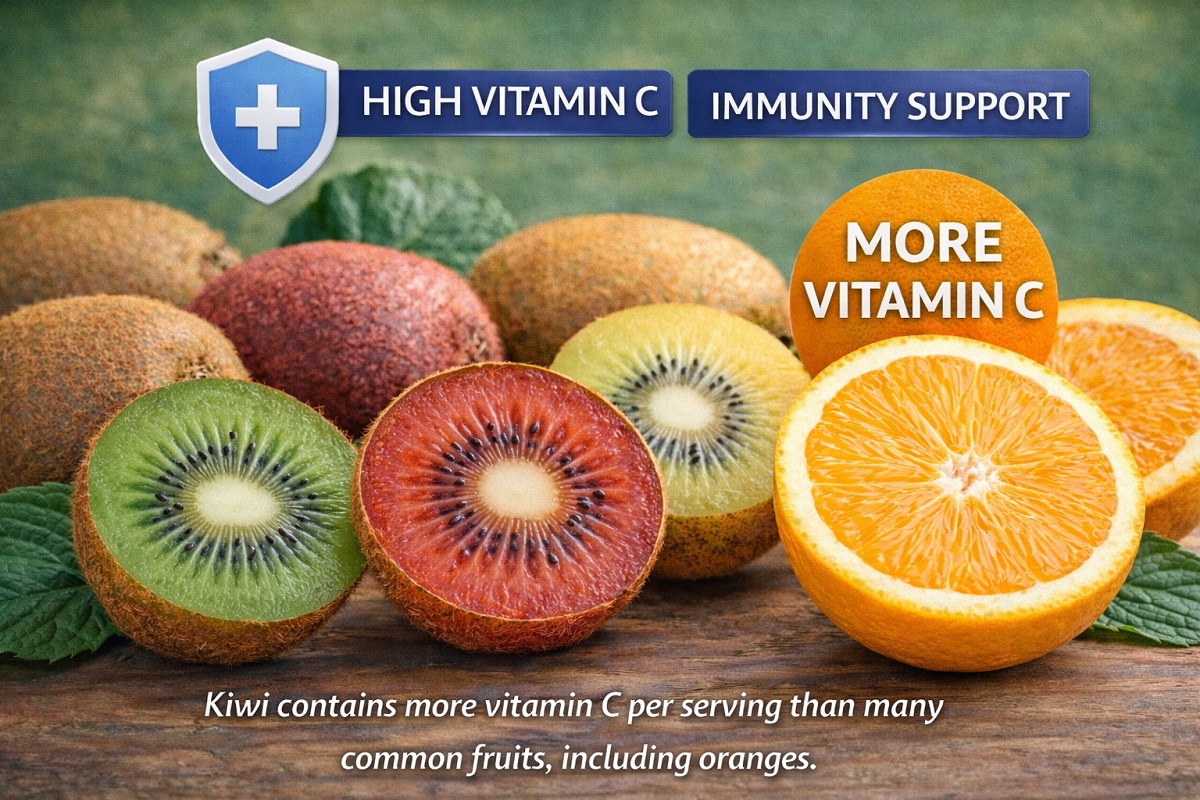
Kiwi and Immunity: Why It Packs More Vitamin C Than an Orange
When people think about immunity-supporting fruits, oranges usually come to mind first. For decades, citrus fruits have been associated with vitamin C and seasonal wellness. However, kiwi fruit quietly offers an even richer vitamin C profile, along with a broader mix of antioxidants and plant compounds that support everyday nutrition.
Across households, nutrition plans, and food markets worldwide, kiwi has gained attention not because of trends, but because of its nutrient density. Whether green, golden, or red kiwi, the fruit delivers consistent nutritional value in a small serving. This article explains how kiwi supports immunity through diet, why its vitamin C content stands out, and how to include it realistically in daily eating.
Understanding Immunity from a Nutrition Perspective
Immunity is not built overnight, and it does not rely on a single food. A well-functioning immune system depends on regular intake of vitamins, minerals, antioxidants, adequate sleep, hydration, and overall diet quality.
Vitamin C plays a supporting role by contributing to normal immune function, antioxidant protection, and nutrient absorption. Unlike supplements, fruits provide vitamin C along with fiber and naturally occurring plant compounds, which work together within the body.
Vitamin C Content: Kiwi vs Orange
One of the most talked-about aspects of kiwi and immunity is its vitamin C concentration. On a per-100-gram basis, most kiwi varieties contain significantly more vitamin C than oranges.
- Green kiwi: Very high vitamin C, along with fiber and enzymes
- Golden kiwi: Even higher vitamin C, milder acidity
- Red kiwi: Comparable vitamin C with added anthocyanins
Oranges remain a good vitamin C source, but kiwi delivers more vitamin C in a smaller portion. This makes it easier for people to meet daily requirements without consuming large quantities of fruit.
Why Kiwi Is Considered an Immunity-Supporting Fruit
1. High Vitamin C in a Small Serving
One medium kiwi can supply a substantial portion of daily vitamin C needs. This efficiency matters for people who struggle to eat enough fruits or prefer variety.
Unlike citrus fruits that rely mainly on vitamin C alone, kiwi combines this vitamin with fiber and antioxidants, which support nutrient absorption and digestion.
2. Antioxidants Beyond Vitamin C
Kiwi contains several antioxidant compounds, including polyphenols, carotenoids, and flavonoids. Red kiwi varieties also contain anthocyanins, the pigments responsible for their reddish color.
Antioxidants help protect cells from oxidative stress caused by daily environmental exposure, physical stress, and dietary imbalances.
3. Fiber Supports Gut-Immune Connection
The digestive system plays a key role in immune balance. Kiwi provides both soluble and insoluble fiber, supporting regular digestion and a healthy gut environment.
As discussed in our kiwi for digestive health guide, fiber-rich fruits help maintain normal gut function, which indirectly supports immunity.
Green, Golden, and Red Kiwi: Do They Differ for Immunity?
All kiwi varieties support immunity through nutrition, but there are subtle differences:
- Green kiwi: Balanced fiber and vitamin C, widely available
- Golden kiwi: Higher vitamin C, sweeter taste
- Red kiwi: Vitamin C plus anthocyanins, emerging market variety
Choosing between them often depends on taste preference and availability rather than major nutritional gaps.
How to Include Kiwi for Immune Support
- Eat fresh kiwi as part of breakfast or mid-morning snacks
- Add sliced kiwi to fruit bowls or yogurt
- Blend into smoothies with apple, banana, or berries
- Consume whole rather than juiced to retain fiber
One kiwi per day fits comfortably into most balanced diets.
Best Time to Eat Kiwi for Immunity
Kiwi can be eaten at any time of day. Many people prefer morning or daytime consumption to support nutrient absorption. Some include kiwi during seasonal changes when fresh fruit intake becomes more important.
Timing matters less than consistency. A regular intake of fruits over weeks and months contributes more than short-term changes.
Seasonality and Freshness Matter
Fresh, in-season kiwi generally offers better taste and nutrient retention. During peak harvest periods, locally sourced kiwi often delivers higher quality.
Imported kiwi helps maintain year-round access, but proper storage remains important to preserve vitamin content.
Limitations and Practical Considerations
- Excess intake may cause mouth sensitivity in some people
- People with known fruit allergies should exercise caution
- Kiwi supports immunity nutritionally but does not replace medical care
Conclusion: Kiwi’s Role in Everyday Immunity Nutrition
Kiwi supports immunity not through claims or trends, but through consistent nutritional value. Its high vitamin C content, combined with antioxidants and fiber, makes it a practical fruit for daily diets.
While oranges remain useful, kiwi offers a compact and efficient alternative for people seeking variety. When eaten regularly as part of a balanced diet, green, golden, and red kiwi contribute meaningfully to everyday nutrition.
Frequently Asked Questions (FAQs)
Does kiwi really have more vitamin C than orange?
Yes, most kiwi varieties provide more vitamin C per 100 grams than oranges.
Can I eat kiwi daily for immunity?
Yes, one kiwi per day is suitable for most people as part of a balanced diet.
Is golden kiwi better than green kiwi for immunity?
Golden kiwi contains slightly more vitamin C, but both are nutritious.
What about red kiwi?
Red kiwi offers vitamin C along with anthocyanins, supporting antioxidant intake.
Is kiwi suitable for children?
Yes, ripe kiwi can be included in children’s diets in moderate amounts.
Does cooking kiwi reduce vitamin C?
Yes, prolonged heating reduces vitamin C, so fresh consumption is best.