
Kiwi for Digestive Health: How Actinidin and Fiber Support Natural Digestion
Digestive discomfort is one of the most common daily health complaints across age groups and lifestyles. From occasional bloating after meals to irregular bowel movements, many people look for food-based solutions before turning to supplements or medications. Kiwi fruit has gained attention in this space not as a cure, but as a naturally digestion-friendly fruit that fits easily into everyday diets.
As discussed earlier in our kiwi fruit benefits guide, kiwi is valued not for one isolated nutrient but for how its components work together. Two of the most important contributors to kiwi’s digestive role are its natural enzyme actinidin and its balanced dietary fiber content. This article explains how kiwi supports digestive health in a realistic, practical way, focusing on everyday use rather than exaggerated claims.
Understanding Digestive Health in Daily Life
Healthy digestion is not just about avoiding discomfort. It involves the smooth breakdown of food, absorption of nutrients, and regular elimination of waste. Modern eating habits, irregular meal timings, low fiber intake, and high reliance on processed foods often disrupt this balance.
For many people, small dietary changes make a noticeable difference. Adding whole fruits, drinking enough water, and eating at regular intervals often support digestion more sustainably than quick fixes. Kiwi fits naturally into this approach because it combines hydration, fiber, and enzyme activity in a single fruit.
What Is Actinidin and Why Does It Matter?
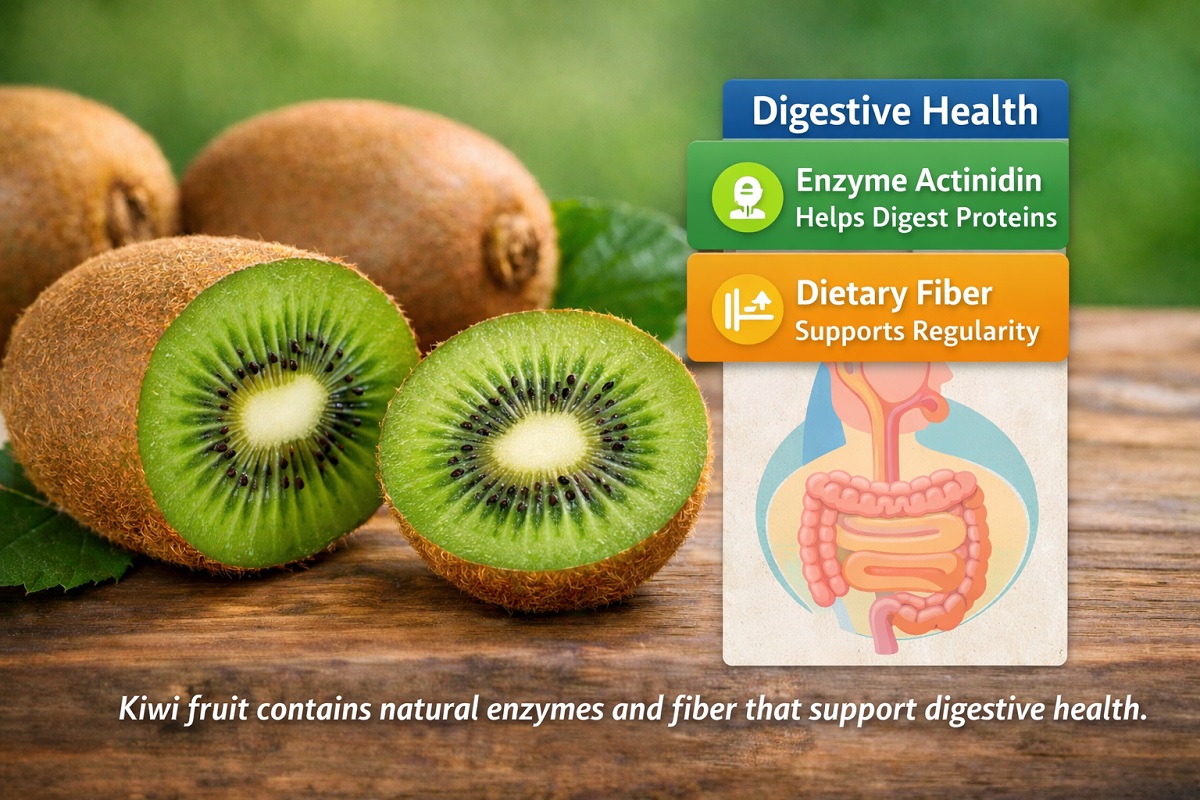
Actinidin is a naturally occurring enzyme found in kiwi fruit. Enzymes are proteins that assist chemical reactions in the body, including the breakdown of food during digestion. Actinidin is particularly known for its ability to help break down proteins.
In practical terms, this means kiwi can support the digestive process when meals are protein-heavy. This is one reason kiwi is sometimes eaten after meals rather than before them. It is also why kiwi has traditionally been used in small amounts in meat marinades, where it helps tenderize meat.
Unlike artificial digestive aids, actinidin works gently as part of a whole food. Its effect varies from person to person, depending on overall diet, hydration, and digestive sensitivity.
Dietary Fiber in Kiwi Fruit and Its Role in Digestion
Fiber is one of the most important dietary components for digestive health, yet it is often under-consumed. Kiwi contains both soluble and insoluble fiber, which together support normal bowel function.
Soluble fiber absorbs water and helps form softer stools, while insoluble fiber adds bulk and supports regular movement through the digestive tract. Kiwi’s fiber structure is gentle compared to very coarse fibers, which makes it suitable for many people who find other high-fiber foods uncomfortable.
As explained in our kiwi nutrition facts guide, fiber content alone does not determine digestive comfort. The combination of fiber with water content and natural enzymes is what makes kiwi particularly well tolerated.
Kiwi for Constipation: A Food-Based Perspective
Constipation is often linked to low fiber intake, dehydration, irregular eating habits, or limited physical activity. While severe or persistent issues require professional attention, mild constipation is frequently managed through dietary adjustments.
Kiwi is commonly included in such adjustments because:
- It contributes dietary fiber without being heavy
- It has high water content
- It is easy to digest when ripe
- It fits well into breakfast or post-meal routines
Many people find that eating one kiwi per day, combined with adequate water intake, supports more regular bowel movement over time. This effect is gradual and depends on consistency rather than immediate results.
How Kiwi Supports Digestion After Meals
Post-meal heaviness is a common complaint, especially after protein-rich or large meals. Kiwi’s actinidin enzyme plays a role here by assisting protein breakdown, which may reduce the feeling of fullness or sluggishness for some individuals.
In real-world use, people often consume half or one kiwi after lunch or dinner. This habit is more common in households that prioritize whole foods and fruit-based digestion support rather than packaged digestive products.
It is important to note that kiwi should complement balanced eating habits, not compensate for overeating or highly processed diets.
Best Way to Eat Kiwi for Digestive Comfort
How kiwi is consumed can influence how well it supports digestion. Simple preparation methods tend to work best.
- Eat kiwi fresh and ripe
- Consume it whole rather than juiced
- Have it after meals rather than on an empty stomach if sensitive
- Pair it with other fiber-rich foods like oats or yogurt
Some people prefer green kiwi for digestion due to its slightly higher fiber content, while others find golden kiwi gentler because of its lower acidity. Taste preference and tolerance usually guide this choice, as discussed in our green kiwi vs golden kiwi comparison.
Kiwi and Gut-Friendly Eating Habits
Digestive health is influenced by overall eating patterns, not individual foods alone. Kiwi works best when included as part of a gut-friendly routine that includes:
- Regular meal timings
- Adequate water intake
- Whole grains and vegetables
- Moderate portion sizes
In this context, kiwi acts as a supportive fruit rather than a standalone solution. Its natural sweetness also helps people replace processed desserts or sugary snacks, indirectly benefiting digestion.
Kiwi Skin and Seeds: Do They Help Digestion?
Kiwi seeds are edible and contribute small amounts of fiber. The skin is also edible, though its fuzzy texture is not appealing to everyone.
Eating the skin increases fiber intake slightly, but it is not necessary for digestive benefits. Those new to kiwi or with sensitive digestion often prefer peeled fruit. If consuming the skin, thorough washing is essential.
Who May Need to Be Cautious with Kiwi
While kiwi is generally well tolerated, some individuals may experience mild mouth irritation due to enzyme activity. This is usually temporary and more common when kiwi is eaten in large quantities.
People with known fruit allergies or sensitive oral tissues should introduce kiwi gradually. For digestive comfort, moderation is key. Eating more than one or two kiwis per day may cause discomfort rather than benefit.
Kiwi Compared to Other Fruits for Digestion
Many fruits support digestion in different ways. Bananas are often chosen for their softness, apples for fiber, and papaya for enzyme content. Kiwi stands out because it combines fiber, water, and enzyme activity in a single fruit.
This combination makes kiwi a useful option in fruit rotation rather than a replacement for other fruits. Diversity in fruit intake supports a broader range of nutrients and digestive comfort.
Practical Tips for Including Kiwi in a Digestive Routine
- Add sliced kiwi to breakfast bowls
- Eat one kiwi after a heavy meal
- Combine kiwi with yogurt or oats
- Choose ripe fruit for easier digestion
Consistency matters more than quantity. Small, regular intake is more effective than occasional large portions.
Conclusion: Is Kiwi Helpful for Digestive Health?
Kiwi supports digestive health through its natural enzyme actinidin, balanced fiber content, and high water content. It does not act as a quick fix, but as a food that fits well into everyday eating patterns focused on digestive comfort.
For people dealing with mild constipation, post-meal heaviness, or low fruit intake, kiwi offers a practical and accessible option. Here is full report on – Consumption of Kiwifruits Improves Constipation and Abdominal Comfort. As part of a varied diet, it contributes to digestion without requiring major lifestyle changes.
Frequently Asked Questions (FAQs)
Is kiwi good for digestion?
Kiwi contains fiber and natural enzymes that support normal digestion when eaten in moderation.
Can kiwi help with constipation?
Kiwi may support regular bowel movement as part of a fiber-rich diet and adequate hydration.
What is actinidin in kiwi?
Actinidin is a natural enzyme in kiwi that helps break down protein during digestion.
Is it better to eat kiwi before or after meals?
Many people prefer eating kiwi after meals, especially after protein-rich foods.
Can children eat kiwi for digestion?
Yes, ripe kiwi can be included in children’s diets in small quantities.
Does kiwi cause acidity?
Some people with sensitive digestion may find kiwi slightly acidic, while others tolerate it well.
How much kiwi should I eat for digestive benefits?
One kiwi per day is generally sufficient for most people.