
Kiwi Nutrition Facts: Vitamins, Minerals, and Calorie Breakdown
Kiwi fruit is often praised for its health benefits, but to truly understand why it is considered a nutritious choice, it helps to look closely at its nutritional composition. Beyond the bright green color and refreshing taste, kiwi contains a wide range of vitamins, minerals, fiber, and natural compounds that fit well into everyday diets across the world.
In our detailed kiwi fruit benefits guide, we discussed how this fruit supports digestion, immunity, and balanced eating habits. This cluster article goes one step deeper and focuses purely on kiwi nutrition facts, breaking down calories, vitamins, minerals, and other key components in a clear and practical way.
This guide is written for a global audience, including health-conscious readers, students of nutrition, farmers interested in produce value, and anyone who wants reliable information without exaggerated claims.
Nutritional Overview of Kiwi Fruit
Kiwi is considered a nutrient-dense fruit, meaning it provides a good amount of essential nutrients relative to its calorie content. Unlike highly processed foods, kiwi delivers these nutrients in a natural, easily digestible form.
Most of kiwi’s nutrition comes from:
- Natural vitamins, especially vitamin C
- Essential minerals like potassium
- Dietary fiber for digestive support
- Natural antioxidants found in plant foods
This balanced profile is one reason kiwi is frequently included in fruit bowls, smoothies, and light meals.
Calories in Kiwi Fruit
Kiwi fruit is relatively low in calories, which makes it suitable for people who are mindful of their energy intake.
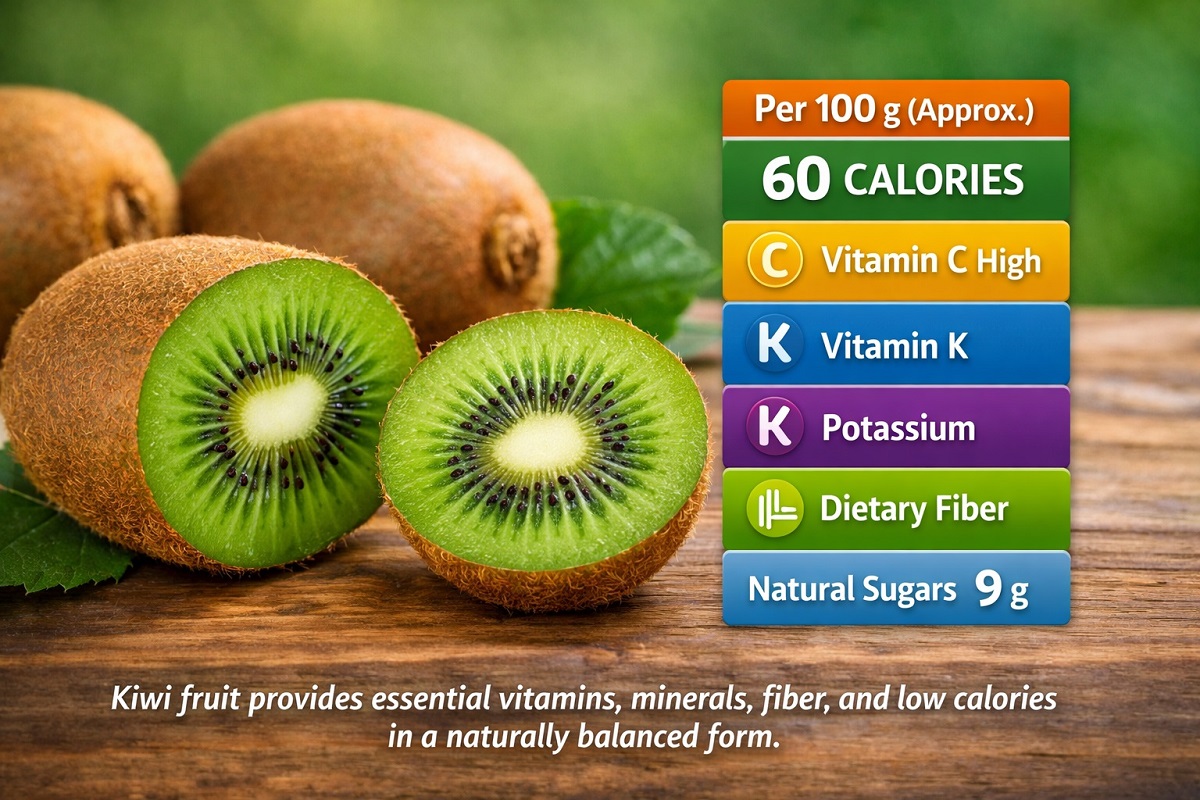
Calories per 100 grams (approx.)
- Calories: ~60 kcal
Calories per medium kiwi
- Calories: ~40–45 kcal (depending on size)
Because kiwi is high in water and fiber, it provides volume and satisfaction without adding excessive calories. As explained earlier in our kiwi fruit benefits article, this makes it a useful option for balanced snacking.
Vitamins in Kiwi Fruit
Kiwi is best known for its vitamin content. While vitamin C often gets the most attention, kiwi also contains several other important vitamins.
Vitamin C
Kiwi is one of the richest natural sources of vitamin C among commonly consumed fruits.
- Supports normal immune function
- Helps with iron absorption from plant foods
- Plays a role in collagen formation
One medium kiwi can provide a large portion of the daily vitamin C requirement, which is why it is commonly recommended during periods of seasonal dietary stress.
Vitamin K
Vitamin K is involved in normal blood functions and bone health. Kiwi provides a moderate amount, contributing to overall dietary intake without exceeding recommended levels.
Vitamin E
Unlike many fruits, kiwi contains small but meaningful amounts of vitamin E, a nutrient more commonly associated with nuts and seeds. Vitamin E acts as an antioxidant within the body.
Folate (Vitamin B9)
Folate supports cell growth and is especially important during periods of growth and development. Kiwi offers a natural source of folate as part of a varied diet.
Minerals in Kiwi Fruit
Minerals are just as important as vitamins, and kiwi provides several essential ones in modest but useful amounts.
Potassium
Potassium helps maintain normal fluid balance and supports nerve and muscle function.
- Kiwi contains more potassium than many other fruits
- Often included in diets that aim to balance sodium intake
Magnesium
Magnesium supports normal muscle and nerve function. Kiwi contributes small amounts that complement other magnesium-rich foods.
Copper
Copper plays a role in iron metabolism and energy production. Kiwi contains trace amounts that add to daily mineral intake.
Carbohydrates, Fiber, and Sugar Content
Total Carbohydrates
Kiwi contains natural carbohydrates, primarily from fruit sugars and fiber.
- Total carbs (per 100 g): ~15 g
Dietary Fiber
Fiber is one of kiwi’s most valuable nutritional components.
- Supports digestive regularity
- Helps create a feeling of fullness
- Includes both soluble and insoluble fiber
This is one reason kiwi is often included in digestion-focused meal plans, as discussed in our kiwi benefits overview.
Natural Sugars
The sugars in kiwi are naturally occurring and balanced by fiber and water.
- Sugars (per 100 g): ~9 g
Because of this balance, kiwi does not cause sharp sweetness compared to many processed snacks.
Antioxidants and Natural Plant Compounds
Kiwi contains several plant-based antioxidants that help protect the fruit itself from environmental stress. When consumed as part of a varied diet, these compounds contribute to overall antioxidant intake.
Notable antioxidants in kiwi include:
- Lutein
- Zeaxanthin
- Polyphenols
These compounds are commonly found in fruits and vegetables and are valued for their role in balanced nutrition.
Green Kiwi vs Golden Kiwi: Nutrition Comparison
Both green and golden kiwi are nutritious, but there are slight differences.
- Green kiwi: Higher fiber, more tangy taste
- Golden kiwi: Slightly higher vitamin C, sweeter flavor, lower acidity
The choice often depends on taste preference and availability rather than major nutritional differences.
How Kiwi Fits Into a Balanced Diet
Kiwi can be included in many types of diets without difficulty.
- As a fresh snack between meals
- Added to breakfast bowls or yogurt
- Blended into smoothies with other fruits
- Used in light desserts or fruit salads
For most people, consuming one kiwi per day fits well within a balanced and varied diet.
Nutritional Limitations and Considerations
While kiwi is nutritious, it is not suitable for everyone in unlimited amounts.
- Some individuals may experience mouth irritation due to natural enzymes
- Overconsumption may lead to digestive discomfort
- People with known fruit allergies should be cautious
As with all foods, moderation and individual tolerance matter.
Conclusion: Understanding Kiwi Nutrition Beyond the Label
Kiwi nutrition facts show why this fruit has earned a place in many diets around the world. Its combination of low calories, high vitamin C, useful fiber, and essential minerals makes it a practical choice rather than a trend-driven one.
When viewed alongside the broader kiwi fruit benefits discussed in our pillar guide, the nutritional profile helps explain how kiwi supports everyday eating habits. Choosing fresh, ripe kiwi and consuming it as part of a varied diet remains the most realistic approach.
Frequently Asked Questions (FAQs)
1. How many calories are in one kiwi fruit?
A medium kiwi contains approximately 40–45 calories, depending on size.
2. Is kiwi high in vitamin C?
Yes, kiwi is one of the richest natural fruit sources of vitamin C.
3. Does kiwi contain natural sugar?
Kiwi contains naturally occurring fruit sugars, balanced by fiber and water.
4. Is kiwi suitable for weight-conscious diets?
Kiwi is low in calories and high in fiber, making it suitable when eaten in moderation.
5. What minerals are found in kiwi fruit?
Kiwi contains potassium, magnesium, and small amounts of copper.
6. Is golden kiwi more nutritious than green kiwi?
Both are nutritious. Golden kiwi is slightly higher in vitamin C, while green kiwi provides more fiber.
7. Can kiwi be eaten daily?
For most people, eating one kiwi per day fits well into a balanced diet.