
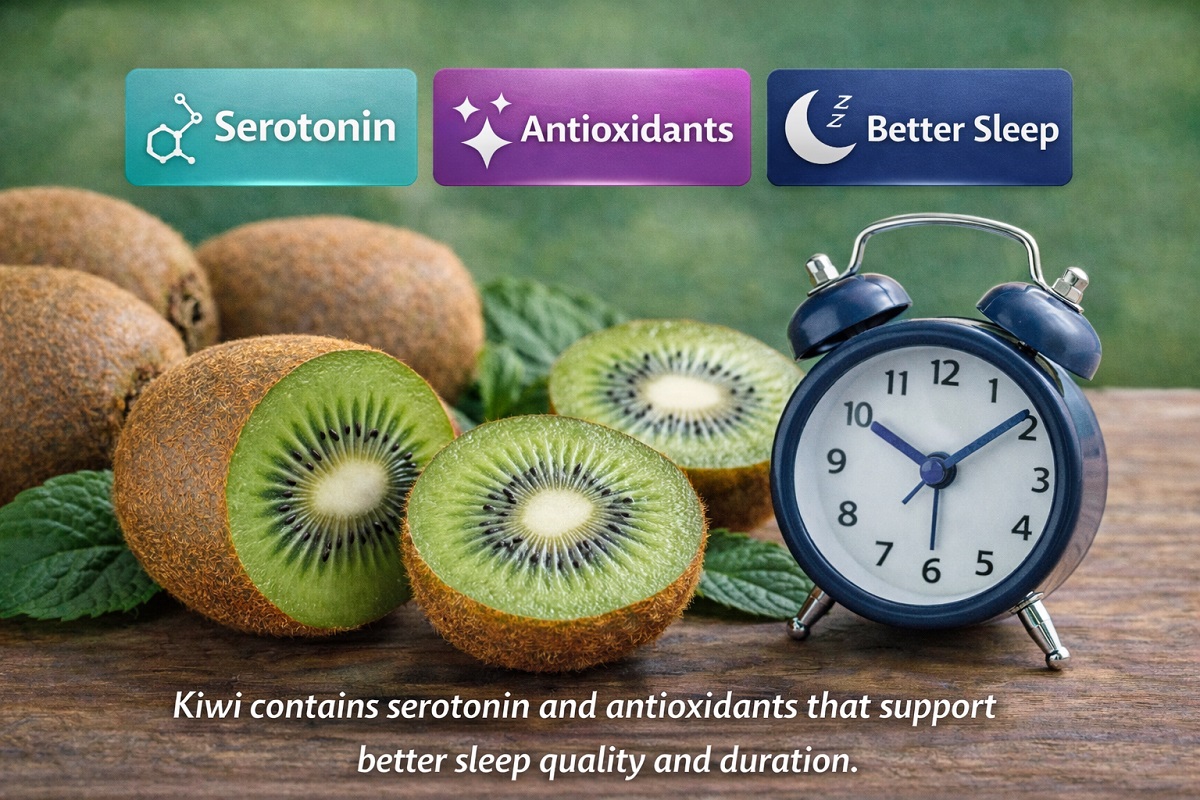
Kiwi for Better Sleep Quality: How This Fruit Supports Better Sleep Duration and Restfulness
Sleep quality plays a central role in physical health, mental clarity, emotional balance, and metabolic function. Yet, many people struggle with falling asleep, staying asleep, or waking up refreshed. While lifestyle habits such as light exposure, stress management, and consistent sleep schedules matter most, diet also influences sleep patterns more than many realize.
Kiwi fruit benefits are so impressive that it has gained attention in recent years for its potential role in improving sleep quality and duration. Unlike common sleep-related foods that rely on heavy carbohydrates or sedative effects, kiwi supports sleep through naturally occurring compounds such as serotonin precursors, antioxidants, and micronutrients.
This article explains how kiwi affects sleep, what the research suggests, how to eat kiwi for sleep benefits, and who may benefit most from including it in an evening routine.
Why Diet Influences Sleep Quality
Sleep is regulated by a complex interaction between hormones, neurotransmitters, circadian rhythms, and nervous system signals. Nutritional intake influences several of these pathways, particularly those related to serotonin, melatonin, inflammation, and oxidative stress.
Foods that support steady blood sugar, reduce inflammation, and provide key micronutrients can indirectly improve sleep onset, duration, and perceived restfulness. Conversely, diets high in refined sugars, stimulants, or heavy late-night meals often disrupt sleep cycles.
Kiwi fits into the first category. It is light, nutrient-dense, and contains compounds that support the body’s natural sleep-regulating mechanisms.
Serotonin and Its Role in Sleep
Serotonin is a neurotransmitter involved in mood regulation, appetite, and sleep-wake cycles. It also acts as a precursor to melatonin, the hormone responsible for signaling the body that it is time to sleep.
Low serotonin activity has been associated with sleep disturbances, delayed sleep onset, and poor sleep efficiency. Supporting serotonin pathways through diet does not act as a sedative, but it helps normalize the biological signals that promote healthy sleep rhythms.
Kiwi contains naturally occurring serotonin as well as nutrients that support serotonin metabolism. This combination is one reason kiwi is frequently mentioned in sleep-related nutritional research.
Antioxidants in Kiwi and Sleep Recovery
Oxidative stress and low-grade inflammation can interfere with sleep quality by affecting nervous system signaling and increasing nighttime awakenings. Antioxidants help neutralize free radicals and support cellular repair processes that occur during sleep.
Kiwi is rich in antioxidants, including:
- Vitamin C
- Carotenoids
- Polyphenols
These compounds help reduce oxidative stress, which may improve sleep efficiency and reduce nighttime restlessness. While antioxidants alone do not induce sleep, they contribute to a physiological environment that supports deeper and more restorative rest.
Kiwi and Sleep Duration: What Research Observes
Several nutrition-focused studies have observed improvements in sleep duration and quality among individuals who consumed kiwi regularly in the evening. Participants often reported:
- Faster sleep onset
- Longer total sleep time
- Reduced nighttime awakenings
- Improved morning alertness
These outcomes are believed to result from kiwi’s combined effects on serotonin pathways, antioxidant activity, and overall nutrient support rather than from a single isolated compound.
Importantly, kiwi does not act like a sleeping pill. Its effects are gradual and supportive, making it suitable for regular dietary inclusion rather than occasional use.
Nutrients in Kiwi That Support Sleep
Beyond serotonin and antioxidants, kiwi provides several nutrients that indirectly support sleep regulation.
Vitamin C
Vitamin C helps regulate cortisol levels. Elevated cortisol, especially at night, is associated with difficulty falling asleep. Adequate vitamin C intake supports stress regulation, which can positively influence sleep patterns.
Folate
Folate plays a role in neurotransmitter synthesis. Low folate levels have been associated with sleep disturbances and mood irregularities.
Potassium
Potassium supports muscle relaxation and nerve signaling. Adequate potassium intake may help reduce nighttime muscle cramps and restlessness.
Dietary Fiber
Stable blood sugar during the night supports uninterrupted sleep. Kiwi’s fiber helps prevent rapid glucose fluctuations that may otherwise trigger nighttime awakenings.
Does Kiwi Help You Fall Asleep Faster?
Many people report falling asleep faster when kiwi is included as part of their evening routine. This effect is not immediate in the way pharmaceutical sleep aids work, but rather cumulative.
Eating kiwi regularly in the evening may help establish a consistent sleep signal, especially when combined with other sleep-supportive habits such as reduced screen exposure and consistent bedtime schedules.
The effect appears strongest in individuals who previously struggled with delayed sleep onset or irregular sleep timing.
Best Time to Eat Kiwi for Sleep Benefits
Timing matters when using food to support sleep quality.
Most observations suggest eating kiwi approximately 60 minutes before bedtime. This allows time for digestion without causing discomfort or blood sugar disruption.
Kiwi works best when eaten:
- As a light evening snack
- Without added sugars
- Not immediately after a heavy meal
Eating kiwi too close to bedtime may not allow enough time for its nutrients to influence sleep-related pathways.
How Much Kiwi Should You Eat for Better Sleep?
Moderation is important. Most people benefit from:
- One medium kiwi
- Or two small kiwis
Eating large quantities does not enhance sleep benefits and may cause digestive discomfort in sensitive individuals.
Consistency over quantity appears to matter more. Regular intake over several weeks tends to show better results than occasional use.
Green Kiwi vs Golden Kiwi for Sleep
Both green and golden kiwi contain sleep-supportive nutrients, but there are subtle differences:
- Green kiwi contains slightly more fiber and has a tangier profile.
- Golden kiwi is sweeter and easier to digest for some people.
People with sensitive digestion may prefer golden kiwi in the evening, while those focused on fiber intake may choose green kiwi.
Kiwi Compared to Other Sleep-Related Foods
Several foods are commonly associated with sleep support, including bananas, almonds, cherries, and warm milk.
Kiwi differs because it:
- Contains serotonin-related compounds
- Is low in calories
- Does not rely on heavy fats or sugars
- Supports digestion rather than slowing it
This makes kiwi suitable for people who prefer a light pre-bed snack rather than a filling meal.
Who May Benefit Most from Eating Kiwi for Sleep?
Kiwi may be particularly helpful for:
- People with mild sleep disturbances
- Individuals experiencing stress-related sleep issues
- Those with irregular sleep schedules
- People seeking non-medicated sleep support
Kiwi is not a replacement for medical treatment in cases of chronic insomnia or sleep disorders, but it can complement healthy sleep routines.
Who Should Be Cautious?
While kiwi is generally safe, a few individuals should exercise caution:
- People with kiwi or latex-related fruit allergies
- Those with sensitive stomachs prone to acidity
- Individuals who experience mouth irritation from kiwi enzymes
If discomfort occurs, reducing portion size or consuming kiwi earlier in the evening may help.
FAQs – Kiwi and Sleep Quality
- Does kiwi really help with sleep?
- Kiwi may support better sleep quality by providing serotonin-related compounds, antioxidants, and nutrients that help regulate sleep cycles.
- How long before bed should I eat kiwi?
- Eating kiwi about 60 minutes before bedtime is commonly recommended.
- Can I eat kiwi every night for sleep?
- Yes, most people can safely eat kiwi nightly as part of a balanced diet.
- Is kiwi better than bananas for sleep?
- Both fruits support sleep differently. Kiwi provides serotonin-related benefits, while bananas support muscle relaxation through magnesium and potassium.
- Does kiwi increase melatonin?
- Kiwi does not directly contain high melatonin but supports serotonin pathways that influence melatonin production.
- Can diabetics eat kiwi at night for sleep?
- Yes, in controlled portions, kiwi is generally suitable due to its low glycemic index.
Conclusion
Kiwi fruit offers a unique combination of serotonin-related compounds, antioxidants, and micronutrients that support better sleep quality and duration. Rather than acting as a sedative, kiwi helps regulate the biological processes that allow the body to transition into restful sleep more naturally.
This guide focuses specifically on dietary and nutritional use. Topics related to kiwi farming, varieties, and cultivation are covered separately.
When eaten consistently, in moderation, and as part of a healthy evening routine, kiwi can become a simple, food-based addition to better sleep hygiene.