
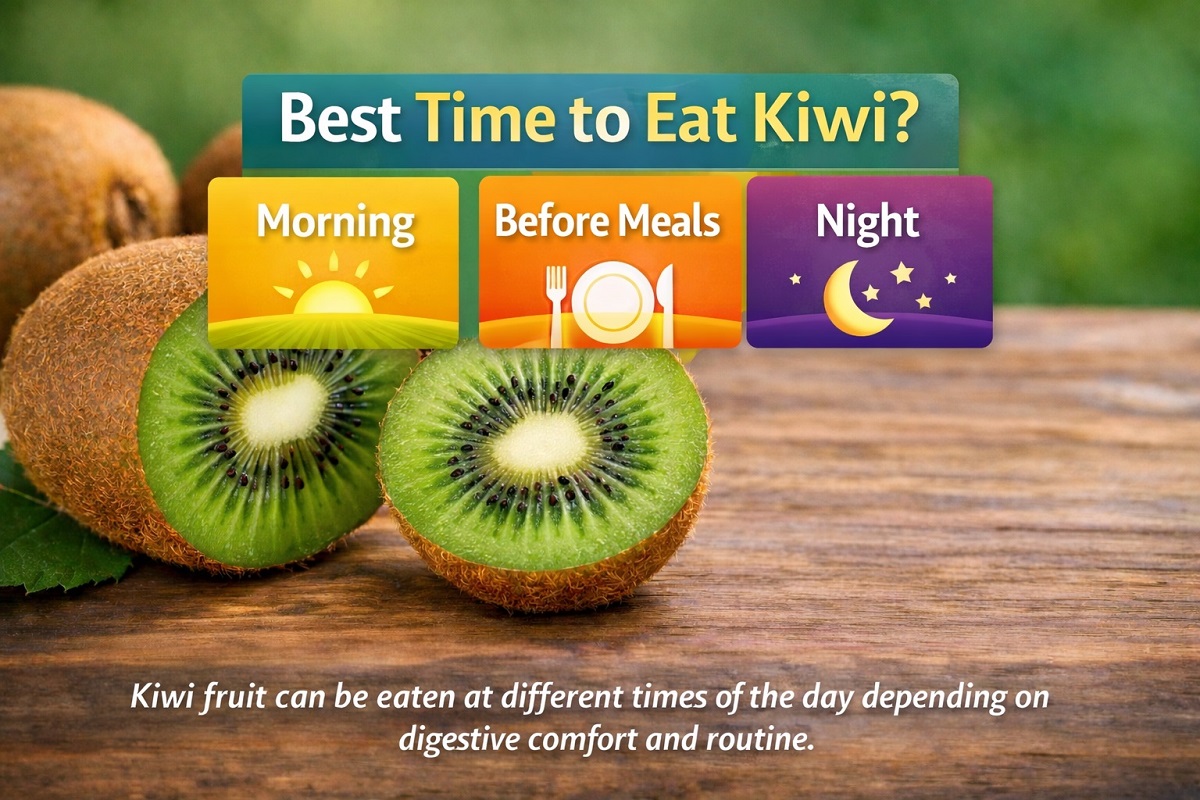
Best Time to Eat Kiwi: Morning, Night, or Before Meals?
Kiwi fruit is often praised for its nutrition, but many people still ask a practical question: when is the best time to eat kiwi? Some prefer it in the morning, others eat it at night, while a few include it before meals for digestion. The answer depends on your daily routine, digestive comfort, and how your body responds to fruit.
This article explains the best time to eat kiwi in a realistic, experience-based way. Instead of fixed rules, it looks at how kiwi behaves in the body at different times of the day and how you can use it effectively. As discussed earlier in our comprehensive guide on kiwi fruit benefits, timing can influence how comfortably your body uses the fruit.
Why Timing Matters When Eating Kiwi
Kiwi contains natural fiber, fruit acids, and enzymes such as actinidin. These components interact differently with the digestive system depending on whether your stomach is empty, partially full, or preparing for rest.
Eating kiwi at the right time can:
- Improve digestive comfort
- Reduce bloating or heaviness
- Support better nutrient absorption
- Fit better into daily eating habits
Understanding timing does not mean kiwi becomes ineffective at other times—it simply helps you use it more comfortably and consistently.
Eating Kiwi in the Morning: Is It a Good Idea?
Morning is one of the most common times people eat kiwi, especially as part of breakfast. When eaten in the morning, kiwi is usually consumed on an empty or lightly filled stomach.
Benefits of Eating Kiwi in the Morning
- Light on the stomach after overnight fasting
- Fiber supports regular bowel movement
- Vitamin C contributes to daily nutrient intake
- Pairs well with breakfast foods like oats or yogurt
Many people who struggle with slow digestion prefer kiwi in the morning because its fiber and natural enzymes help “wake up” the digestive system. This is especially helpful when combined with water and a balanced breakfast.
Who Should Prefer Morning Consumption?
Eating kiwi in the morning often works well for:
- People with irregular digestion
- Office workers looking for a light breakfast fruit
- Students who need easy-to-digest energy
However, those with sensitive stomachs may want to avoid eating kiwi completely on an empty stomach and instead pair it with other foods.
Eating Kiwi Before a Meal: Does It Help Digestion?
Another common practice is eating kiwi shortly before a main meal, especially lunch or dinner. This approach is often chosen for digestive reasons.
How Kiwi Works Before Meals
Kiwi contains the enzyme actinidin, which helps break down protein. When eaten 20–30 minutes before a meal, kiwi may support smoother digestion of heavier foods.
This is why kiwi is sometimes used in food preparation and meat marinades. In daily life, eating a small portion of kiwi before meals may reduce the feeling of heaviness after eating.
Best Practices
- Eat half to one kiwi before meals
- Avoid combining with very spicy or acidic foods
- Drink water after, not immediately before
As explained in our article on kiwi for digestive health, moderation is important. Too much kiwi before meals may cause mild discomfort for some individuals.
Eating Kiwi After a Meal: Is It Still Useful?
Many people eat fruit after meals as dessert, and kiwi is no exception. When eaten after meals, kiwi still provides fiber and nutrients, but its enzyme activity may be slightly reduced due to slower digestion.
When After-Meal Kiwi Works Well
- After light or balanced meals
- When replacing sugary desserts
- As a fresh palate cleanser
Eating kiwi after meals can be a healthier alternative to processed sweets. However, after very heavy meals, some people experience bloating when combining fruit and rich foods.
Eating Kiwi at Night: Good or Bad?
Night-time fruit consumption is often debated. Kiwi is relatively light, but its effects depend on quantity and timing.
Potential Benefits of Eating Kiwi at Night
- Low calorie and not heavy
- Provides fiber without excess sugar
- Easy to digest when ripe
Some people include kiwi as part of a light evening snack. It is often preferred over fried or sugary foods.
When to Avoid Kiwi at Night
- If you experience acidity or mouth sensitivity
- If eaten very late before sleep
- If consumed in large quantities
Eating kiwi at least 1–2 hours before bedtime usually works better than eating it right before sleep.
Best Time to Eat Kiwi for Different Goals
For Digestive Comfort
Morning or before meals works best for most people.
For Weight-Conscious Eating
Mid-morning or evening snack portions help control hunger without excess calories.
For General Nutrition
Any time of day works, as long as intake is moderate and consistent.
How Many Kiwi Fruits Should You Eat in a Day?
For most people, one kiwi per day is sufficient. Some may eat two small kiwis, especially during peak season.
- Start with small portions
- Observe how your body reacts
- Avoid overeating for enzyme-related discomfort
As highlighted in our daily fruit intake guide, variety matters more than quantity.
Common Mistakes When Eating Kiwi
- Eating too much at once
- Combining with heavy dairy for long storage
- Eating unripe kiwi regularly
- Ignoring mild allergy symptoms
Simple adjustments in timing and portion size usually solve these issues.
Conclusion: So, When Is the Best Time to Eat Kiwi?
There is no single perfect time to eat kiwi that suits everyone. Morning consumption and eating kiwi before meals tend to offer the most digestive comfort for many people. Evening consumption can also work when portions are small and timing is right.
The key is listening to your body and using kiwi as part of a balanced diet rather than treating it as a quick solution. When eaten thoughtfully, kiwi fits easily into daily routines and complements overall nutrition.
Frequently Asked Questions (FAQs)
1. Is it better to eat kiwi on an empty stomach?
Many people tolerate kiwi well on an empty stomach, but those with sensitive digestion may prefer eating it with other foods.
2. Can I eat kiwi at night?
Yes, kiwi can be eaten at night in small quantities, preferably at least one hour before sleep.
3. Should kiwi be eaten before or after meals?
Eating kiwi before meals may support digestion, while eating it after meals works well as a light dessert.
4. How long after eating kiwi can I sleep?
Waiting 1–2 hours after eating kiwi before sleeping is generally comfortable for most people.
5. Can I eat kiwi every day?
Yes, one kiwi per day is safe for most people as part of a varied diet.
6. Does eating kiwi at the wrong time cause problems?
Usually no, but large quantities or very late-night consumption may cause mild discomfort for some individuals.