
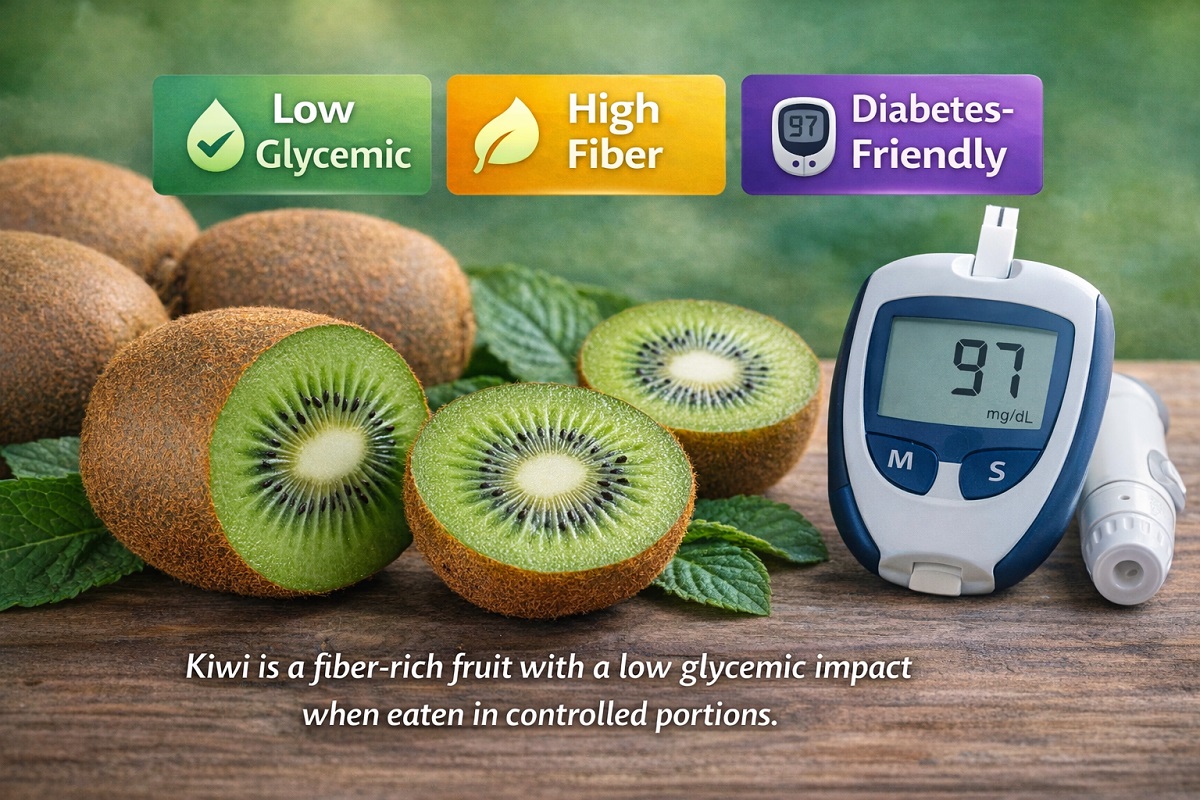
Kiwi for Blood Sugar & Diabetes: How This Fruit Fits into a Diabetic-Friendly Diet
Managing blood sugar levels is a daily priority for people living with diabetes, prediabetes, or insulin resistance. Fruit often becomes a confusing category, nutritious, yet sometimes feared due to natural sugars. Kiwi fruit benefits stands out in this discussion because of its low glycemic impact, high fiber content, and unique nutrient profile.
This guide explains how kiwi affects blood sugar, whether it is safe for people with diabetes, how much can be eaten, and the best ways to include it in balanced meals without causing glucose spikes.
Understanding Blood Sugar and Why Fruit Choices Matter
Blood sugar, or blood glucose, refers to the amount of glucose present in the bloodstream. After eating carbohydrates, the body breaks them down into glucose, which enters the blood and triggers insulin release. In people with diabetes, this process is impaired, either due to insufficient insulin production or reduced insulin sensitivity.
Fruits contain natural sugars, primarily fructose, along with fiber, water, vitamins, and antioxidants. The way a fruit affects blood sugar depends not only on its sugar content, but also on fiber levels, glycemic index (GI), portion size, and how it is consumed.
This is where kiwi becomes particularly relevant. Despite its naturally sweet taste, kiwi behaves differently in the body compared to many high-sugar fruits.
Glycemic Index of Kiwi: What It Means for Diabetes
The glycemic index (GI) measures how quickly a food raises blood glucose levels compared to pure glucose. Foods are generally classified as:
- Low GI: 55 or less
- Medium GI: 56–69
- High GI: 70 or above
Kiwi fruit has a low glycemic index, typically ranging between 50 and 55 depending on ripeness. This means it raises blood sugar more slowly than high-GI fruits such as ripe bananas, watermelon, or pineapple.
For people managing diabetes, low-GI foods are preferred because they help avoid rapid glucose spikes and sudden insulin demands.
Kiwi’s low GI is supported by its fiber structure, organic acids, and relatively modest carbohydrate load per serving.
Carbohydrate and Sugar Content in Kiwi
One medium-sized kiwi (about 75–80 grams) contains approximately:
- Total carbohydrates: 10–11 grams
- Natural sugars: 6–7 grams
- Dietary fiber: 2–3 grams
While the sugar content may appear moderate, the presence of fiber significantly slows digestion and glucose absorption. This makes the net glycemic effect lower than expected based on sugar content alone.
For comparison, many fruits with similar sugar levels contain much less fiber, leading to faster blood sugar rises.
Fiber in Kiwi and Its Role in Blood Sugar Control
Dietary fiber plays a critical role in managing diabetes. Kiwi is especially valuable because it contains both soluble and insoluble fiber.
Soluble fiber forms a gel-like substance in the digestive tract, slowing the absorption of glucose into the bloodstream. Insoluble fiber adds bulk and improves digestive transit, indirectly supporting metabolic health.
Regular fiber intake is associated with:
- Improved insulin sensitivity
- Lower post-meal glucose spikes
- Better appetite control
- Reduced risk of type 2 diabetes progression
Kiwi’s fiber content, combined with its low GI, makes it a smart fruit choice for people aiming to stabilize blood sugar throughout the day.
Does Kiwi Spike Blood Sugar?
When eaten in appropriate portions, kiwi does not cause sharp blood sugar spikes in most people. Studies and dietary observations consistently show that kiwi produces a gradual glucose rise rather than a rapid surge.
However, blood sugar response can vary based on:
- Portion size
- Ripeness of the fruit
- Whether it is eaten alone or with other foods
- Individual insulin sensitivity
Eating kiwi alongside protein, healthy fats, or complex carbohydrates further reduces its glycemic impact.
Kiwi and Insulin Sensitivity
Insulin sensitivity refers to how effectively the body responds to insulin. Improved insulin sensitivity allows glucose to move from the bloodstream into cells more efficiently.
Kiwi contains antioxidants such as vitamin C, polyphenols, and carotenoids, which help reduce oxidative stress, a factor linked to insulin resistance.
While kiwi is not a treatment for diabetes, including antioxidant-rich fruits like kiwi as part of a balanced diet supports overall metabolic health.
Best Ways for People with Diabetes to Eat Kiwi
How kiwi is consumed matters as much as how much is eaten. The following strategies help maximize benefits while minimizing blood sugar fluctuations:
Eat Kiwi Whole, Not Juiced
Whole kiwi retains its fiber, which slows glucose absorption. Kiwi juice, even if freshly made, removes much of this fiber and can raise blood sugar more quickly.
Pair Kiwi with Protein or Fat
Combining kiwi with foods such as nuts, yogurt, seeds, or eggs reduces the overall glycemic load of the meal.
Choose Fresh Over Dried Kiwi
Dried kiwi is concentrated in sugars and lacks water content, making it less suitable for blood sugar control.
Watch Portion Size
For most people with diabetes, one medium kiwi per serving is appropriate.
Golden Kiwi vs Green Kiwi for Diabetes
Both green and golden kiwi offer nutritional benefits, but there are slight differences worth noting.
- Green kiwi tends to be higher in fiber and slightly lower in sugar.
- Golden kiwi is sweeter, with marginally higher sugar content but still a low GI.
For blood sugar management, green kiwi is often the preferred option, though golden kiwi can still be included in moderation.
Can People with Prediabetes Eat Kiwi?
Yes. In fact, kiwi can be a useful fruit for people with prediabetes due to its low glycemic response and fiber content.
Replacing high-GI snacks with fruits like kiwi may help slow the progression from prediabetes to type 2 diabetes when combined with lifestyle changes.
How Often Can Diabetics Eat Kiwi?
Kiwi can be consumed several times per week as part of a balanced diet. Some people tolerate daily consumption well, while others prefer alternating fruits.
Monitoring personal blood glucose responses using a glucose meter can help determine ideal frequency and timing.
Common Mistakes to Avoid
- Eating large quantities of kiwi in one sitting
- Consuming kiwi on an empty stomach if prone to glucose swings
- Pairing kiwi with refined carbohydrates
- Assuming all fruit is interchangeable for diabetes
Awareness and moderation are key.
FAQs – Kiwi and Blood Sugar
- Is kiwi safe for people with type 2 diabetes?
- Yes. Kiwi is generally safe for people with type 2 diabetes when eaten in moderation and as part of a balanced meal.
- How many kiwis can a diabetic eat per day?
- Most people can safely eat one medium kiwi per day. Portion tolerance may vary based on individual blood sugar response.
- Does kiwi raise blood sugar more than apples or berries?
- Kiwi has a similar or slightly lower glycemic impact compared to apples and is comparable to many berries.
- Can kiwi be eaten at night by diabetics?
- Yes, but pairing it with protein or healthy fat is recommended to prevent overnight glucose fluctuations.
- Is kiwi good for gestational diabetes?
- Kiwi may be included in gestational diabetes diets under portion control, but individual medical guidance is important.
- Does kiwi help lower blood sugar?
- Kiwi does not directly lower blood sugar, but its low GI and fiber help maintain stable glucose levels.
Conclusion
Kiwi fruit can be a valuable addition to a diabetes-friendly diet when consumed thoughtfully. Its low glycemic index, fiber content, and antioxidant profile support steady blood sugar levels without sacrificing flavor or nutrition.
This guide focuses on dietary and nutritional use. Topics related to kiwi cultivation, varieties, and farming practices are covered separately.
By choosing whole fruit, controlling portions, and pairing kiwi with balanced meals, people with diabetes and prediabetes can enjoy kiwi confidently as part of a healthy lifestyle.