
Why Some Kiwi Taste Sour (And How to Avoid It)
If you’ve ever taken a bite of kiwi and felt your mouth pucker, you’re not alone. While kiwi is known for its refreshing sweet-tart balance, sometimes it tastes noticeably sour.
The good news? Sour kiwi usually isn’t bad – it’s simply unripe or naturally higher in acidity. In this guide, we’ll explain exactly why some kiwi taste sour and how to choose sweeter fruit every time.
1. The Most Common Reason: The Kiwi Is Not Ripe Yet
The number one reason kiwi tastes sour is simple: it was eaten too early.
What Happens During Ripening?
As kiwi ripens:
- Starches convert into natural sugars (glucose and fructose)
- Acidity slightly decreases
- The flesh softens
- Aroma becomes stronger
Unripe kiwi contains higher acid levels and lower sugar content, which creates that sharp, sour flavor.
How to Tell if a Kiwi Is Too Early
- Very firm when gently squeezed
- Little to no fragrance
- Dry texture inside
- Sharp, acidic taste
If it feels hard like a small potato, it’s not ready yet.
2. Kiwi Is Naturally a High-Acid Fruit
Even perfectly ripe kiwi contains natural acids, including:
- Citric acid
- Malic acid
- Ascorbic acid (Vitamin C)
These acids give kiwi its refreshing tang. The difference between sour and sweet kiwi is balance:
- Ripe kiwi: Sweet + tart
- Unripe kiwi: Mostly tart
Compared to bananas or mangoes, kiwi naturally has higher acidity, so some tang is normal.
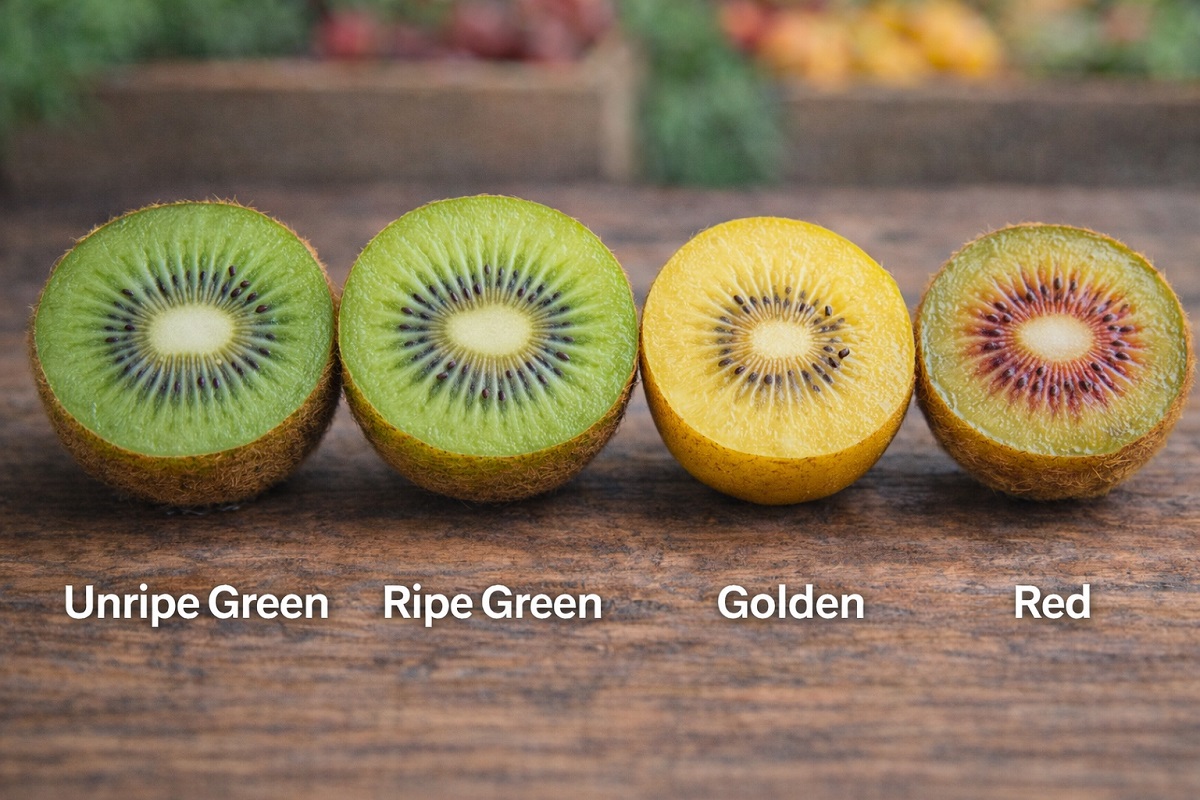
3. Variety Makes a Big Difference
Green Kiwi
- More tart
- Higher acidity
- Bright, sharp flavor
Golden Kiwi
- Sweeter overall
- Lower acidity
- Smoother, tropical taste
Red Kiwi
- Often the sweetest variety
- Lower acid profile
- Berry-like undertones
If you don’t enjoy sour fruit, golden or red kiwi are better choices.
4. Cold Temperature Makes Kiwi Taste More Sour
Eating kiwi straight from the refrigerator can enhance the perception of sourness because cold temperatures dull sweetness and suppress aroma.
Tip: Let kiwi sit at room temperature for 15–20 minutes before eating to enhance sweetness.
5. Early Harvest and Shipping Effects
Commercial kiwi are often harvested firm to survive transport. If picked too early:
- Sugar development may be limited
- Ripening may be uneven
- Acidity may remain dominant
This is more common with imported or off-season fruit.
6. Growing Conditions Influence Sweetness
Climate and soil also affect sugar-acid balance.
- Cooler climates may produce more acidic fruit
- High sun exposure generally increases sweetness
- Water stress can alter flavor concentration
Seasonal kiwi usually tastes better balanced than off-season fruit.
7. Sour vs. Spoiled: Know the Difference
Sour (Unripe) Kiwi:
- Firm texture
- Bright green, yellow, or red interior
- Clean but tart taste
- No unpleasant smell
Spoiled Kiwi:
- Mushy or watery
- Alcohol or vinegar smell
- Brown or translucent patches
- Off or fermented flavor
If it smells fermented, it’s no longer safe to eat.
8. Why Kiwi Sometimes Makes Your Mouth Tingle
Kiwi contains an enzyme called actinidin, which helps break down proteins. This can create a mild tingling sensation on the tongue.
Unripe kiwi contains more active enzyme, which can intensify the perception of sourness.
9. How to Make Sour Kiwi Taste Sweeter
Let It Ripen
Leave it at room temperature for 1–3 days. Place next to bananas or apples to speed ripening.
Pair It With Sweet Foods
- Greek yogurt + honey
- Smoothies with banana
- Oatmeal
- Chia pudding
Add a Pinch of Salt
A tiny pinch of salt reduces perceived acidity and enhances sweetness.
Use It in Savory Dishes
Tart kiwi works well in salads, fruit salsa, and citrus-based dressings.
10. How to Choose Sweeter Kiwi at the Store
- Choose fruit that yields slightly to gentle pressure
- Smell for a mild fruity aroma
- Consider golden or red varieties
- Avoid rock-hard fruit unless you plan to ripen it at home
Quick Summary
Kiwi tastes sour mainly because it is unripe or naturally high in acidity. Variety, temperature, and harvest timing also play a role. In most cases, sour kiwi simply needs more ripening time, not discarding.
Frequently Asked Questions
Why is my kiwi sour but soft?
If a kiwi is soft but sour, it may have ripened unevenly or been harvested early. The sugar levels may not have fully developed.
Are golden kiwi less sour?
Yes. Golden kiwi generally have lower acidity and a sweeter flavor profile compared to green kiwi.
Is sour kiwi bad for you?
No. Sour kiwi is usually just unripe and safe to eat unless it shows signs of spoilage.
Can I sweeten sour kiwi naturally?
Yes. Pair it with naturally sweet foods, allow further ripening, or let it warm to room temperature before eating.